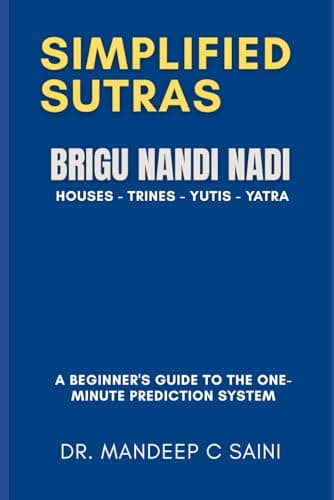
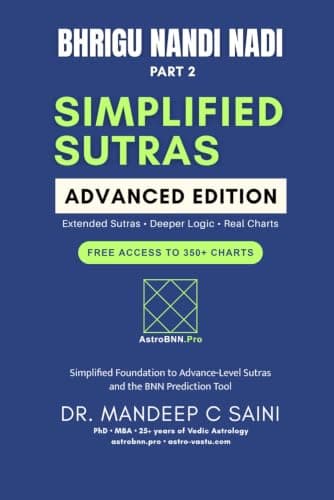
The question every reading ends on
A pattern you cannot date is only a description. Clients rarely leave a consultation asking what their chart says; they leave asking when. This book is about that question, and about being honest regarding how precisely it can be answered.
Three clocks, running at once
The birth chart holds a promise. Progression and Yatra decide when it switches on. BNN reads that through three cycles running simultaneously:
- Jupiter, the 12-year clock. Jeeva. It opens the broad chapters of a life, and across 120 years it traces a complete journey.
- Saturn, the 30-year clock. Karma. The long structural arcs, the ones a person notices only in hindsight.
- Rahu and Ketu, the 18-year clock, running backwards. The reverse journey, and the reason some periods feel like a rehearsal repeating.
Read one at a time and you get a wide period. Read them together and the window narrows sharply. That convergence is the argument of the book.
What it covers
The first part re-teaches the vocabulary briefly: planets as people, karakas, houses as rooms, Yuti, trines, degrees, retrograde. The second part is progression proper, including the distinction that trips most readers up: natal promise, progression, Yatra and transit are four different things, and confusing them is why forecasts fail.
The final part applies it, area by area: marriage and relationships, career, education, children, foreign travel and settlement, property and money.
The discipline it insists on
A slow planet opens the window. A fast planet triggers inside it. Neither alone gives a date, and the book does not pretend otherwise.
This matters more here than anywhere else in the subject. As the book puts it: a person who can say when something will happen can frighten a whole family with one careless sentence. Care matters more than cleverness.
Where it stands
In drafting, at around thirty chapters. Part IV builds on the work of Shri R.G. Rao on planetary rounds, and the book marks on the page where Dr. Mandeep C Saini has added something of his own, so no reader mistakes a teaching aid for the tradition.
If you want the timing method applied to your own chart rather than learned, that is what a consultation does. The mechanism is explained in How BNN times events, and the three cycles this book is built on are introduced in The three clocks: Jupiter, Saturn and Rahu-Ketu.